
WHO WE ARE
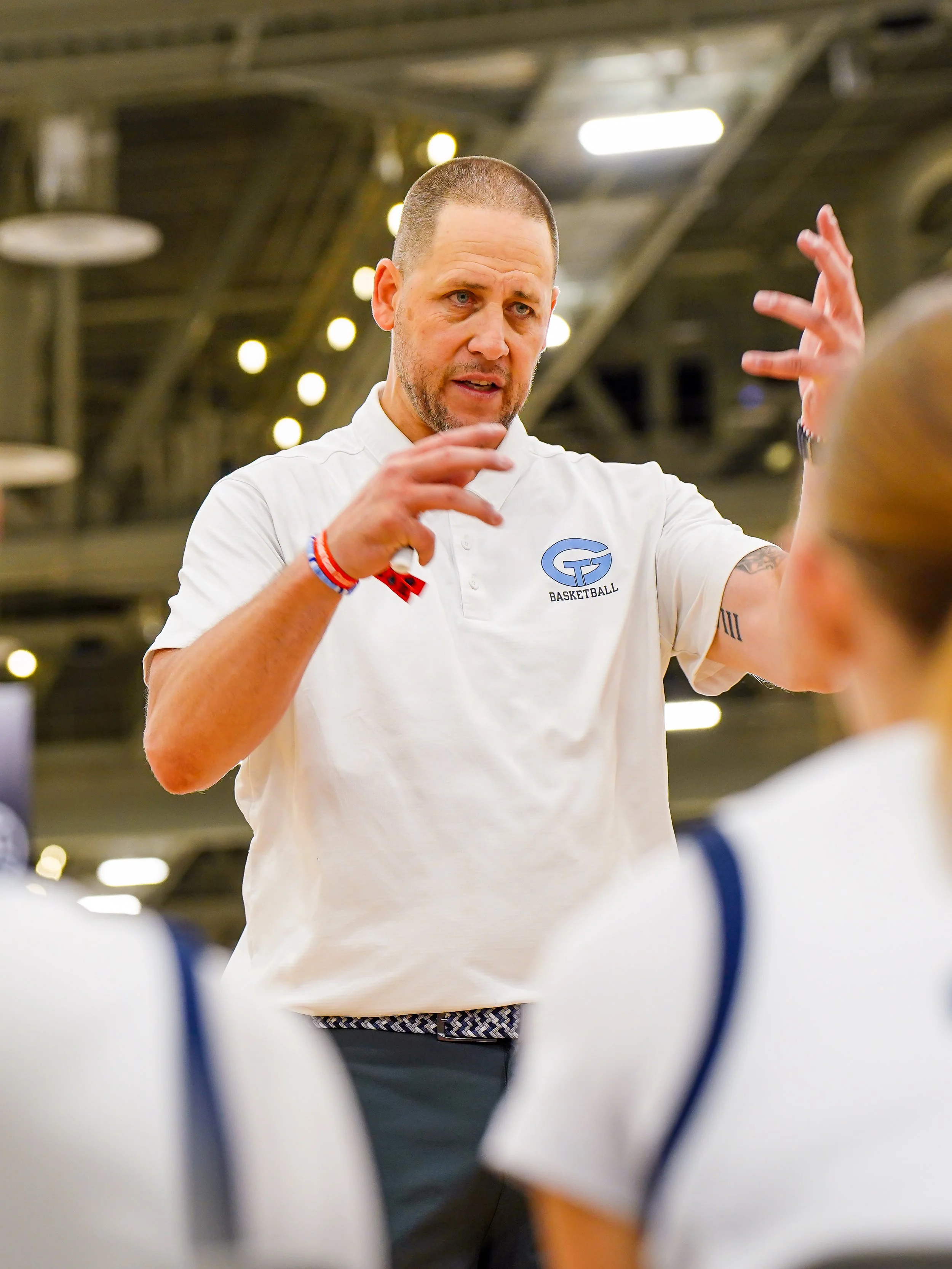
The Flight Hoops Report is directed by a former professional and Division I basketball player and coach with an extensive background in player development and talent evaluation. With coaching experience that spans international professional leagues, the NBA D-League (now G League), and the Nike Elite Circuits, FHR brings a deep understanding of what it takes to succeed at the next level.
Through years of working alongside college recruiters, professional scouts, and championship programs, FHR has developed a proven ability to identify, evaluate, and project talent—pinpointing the skills, mindset, and intangibles that consistently translate to success at the highest levels of womens college basketball.

PROFESSIONAL SKILL DEVELOPMENT:
CLA BASED CURRICULUM: DESIGNED TO DEVELOP WINNING BASKETBALL HABITS AND FUNDAMENTALS.
What CLA Stands For
CLA = Constraints-Led Approach — a teaching and development framework rooted in ecological dynamics.
Instead of telling players exactly how to move, the coach manipulates constraints so athletes naturally discover and refine effective solutions.
The three main constraint categories:
Task Constraints – rules, scoring, time, space, number of players, shot clocks, touches, dribble limits, etc.
Environmental Constraints – noise, crowd stimuli, spacing on the court, lighting, tempo of practice, defensive pressure.
Individual Constraints – player height, speed, skill, fatigue, handedness, decision-making level.
CLA focuses on:
Perception–Action Coupling (reading + reacting)
Representative Learning Design (practice closely simulates games)
Decision-making under pressure
Variable, adaptive skill development
Self-organization of movement rather than robotic drills
In short: CLA trains the game, not drills about the game.
Examples of CLA in Basketball
Small-sided games
Manipulated spacing
Advantage/disadvantage situations (e.g., 3v2, 4v3)
Time or scoring pressure
“Constraints” like:
Must finish with off-hand
Only wide-angle drives allowed
Shot clock modified
Defense starts with a forced rotation
Player must play out of fatigue
Game-based shooting (decision required before the shot)
NBA Teams Using CLA Principles
While NBA teams rarely use the term “CLA” publicly, several organizations heavily integrate constraints-led training and ecological dynamics into player development. The most widely known adopters include:
1. PHILADELPHIA 76ERS
Under Nick Nurse & their player development staff
Heavy on advantage/disadvantage games, guided discovery, and “random practice”
2. San Antonio Spurs
One of the earliest adopters of ecological learning, game-based development, and self-organization concepts
3. Golden State Warriors
Emphasize decision-based shooting, read-and-react training, and constraints manipulation during small-sided games
4. Boston Celtics
Use CLA in player development sessions: altered spacing, rotational triggers, decision-making layers
5. Brooklyn Nets & Oklahoma City Thunder
Both organizations have player-development departments with backgrounds in motor-learning, ecological dynamics, and CLA design
Many NBA skill trainers tied to these organizations incorporate CLA:
Alex Sarama (basketball CLA pioneer) has directly influenced NBA staff
Rob Gray, PhD, and other motor-learning researchers consult with NBA teams
NCAA Division I Programs Using CLA
Again, most don’t use the exact term “CLA”, but many run ecological / game-based development systems.
1. Baylor University (Men’s & Women’s Basketball)
Scott Drew’s program is known for decision-based practice design, variable training, and game-like constraints
2. Gonzaga
Uses small-sided games, representational practice, and CLA concepts heavily in skill/decision integration
3. Villanova (Jay Wright era and post-Wright)
“Play with pace, space, and reads” methodology matches CLA principles
4. Kansas University
Bill Self’s staff uses manipulated constraints in SSGs and advantage drills for decision training
5. Duke University
Jon Scheyer’s era places emphasis on read-based development and guided discovery
6. University of Virginia (Tony Bennett)
Constraints-based defensive teaching and decision-making progression
7. Stanford & Oregon WBB (Vandiver + Graves)
Women’s programs frequently cited for using ecological, game-based decision training models
8. Houston
Kelvin Sampson uses high-pressure, constraints-rich drill environments tied to real game demands.
What Makes CLA Different From Traditional Coaching
Traditional Coaching:
Repetition of isolated drills
Coach gives technical instructions
Closed environments (cone drills)
Technique → Skill
Low transfer to games
Constraints-Led Approach (CLA)
Repetition with variability & decision-making
Athlete self-organizes around constraints
Open, dynamic game-representative environments
Skill emerges from perception → action
High transfer to game performance
Why Basketball Programs Use CLA
CLA dramatically improves:
Transfer of training → live game results
Decision-making speed
Read-and-react habits
Creativity and adaptability
Player confidence under pressure
Development of “feel”
This is precisely why NBA developmental coaching and European academies (Spain, France, Serbia) use CLA almost universally.